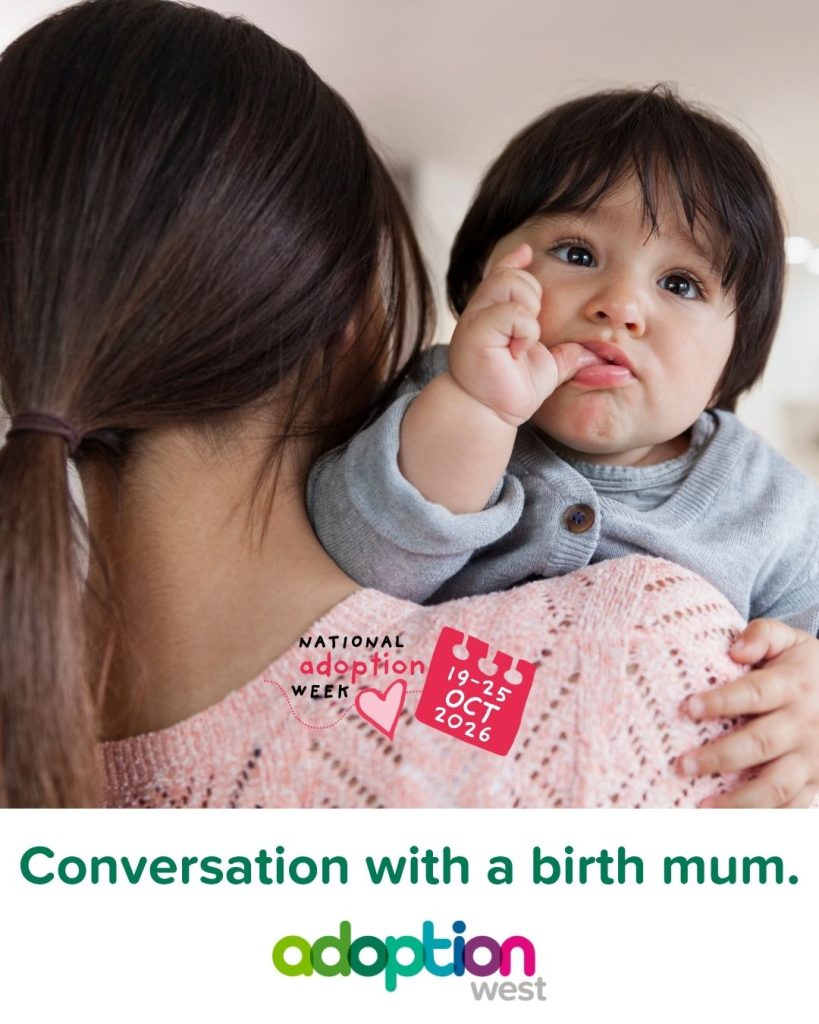
Conversation with a birth mum.
This National Adoption Week, we are considering different viewpoints on the subject of ‘What Does Adoption Mean to You?’
This piece was created through a conversation with a birth mum, whose two youngest children are now adopted. Central to the conversation was what adoption means to her and her children, and what came across loud and clear was the importance of the children and their connections, both to their adopted family and their birth family.
When you commit to becoming an adoptive parent, you must undertake numerous training sessions to help you understand what adoption is. Somewhere along the way, you will encounter a social worker armed with a ball of string: the String Exercise (Google it!). In short, the string is used to demonstrate the numerous significant connections a child has to important people in their lives, and the loss they must endure when losing them.
At the end of the exercise, the string is separated into unconnected strands; the challenge becomes how these connections are re-established for the child.
Talking to J, this exercise came to mind; you could see how her children’s lives had been intertwined not only with her, but with their older siblings, their grandparents, their cousins, their aunts. And right now, they remain separated strands, with J, the adopters and the support services trying to reconnect them.
J lights up when she talks about her children, generously giving me little details from their lives. She has nothing but positive things to say about the adopters of her youngest children. We talk about how the adopters understand her family and help to build connections; her younger children still see their older brothers and sisters, and the adopters talk to the children about J, offering an extra kiss goodnight from her. They send J detailed, informative letters, which J keeps safe and rereads over and over again, just to see a glimpse of their lives now. And she’s grateful that she gets just a little window into their lives and can see how they are developing, the amazing people they are becoming.
J knows her children are safe now, but she’s still their mum. She told me how she doesn’t know what to do with herself in the mornings now the children are gone. It’s so quiet. She remembers where they sat on the pram for the school run, how they did the walk in all weathers, and were never late. She doesn’t have a school run anymore; her children no longer live with her.
J has her first face-to-face contact with her youngest children in a few weeks; she hasn’t seen them since their farewell (now known as a ‘Wish you well’) contact two years ago. Her nervousness and apprehension are palpable, but the excitement at seeing them after so long is indescribable. She will stand with her arms wide open, offering them the safety and security she couldn’t always.
Growing up, the children will always have a sense of J’s presence in their lives and know why they were adopted, which is a necessary part of their identity. They will come to understand their history, the path that led them to their adopters, and the invisible threads that tie them to their birth relations. As they grow, J will be able to share stories of their birth relatives: how Grandad always offered a high five to a tiny hand, and how Grandma crocheted little bags in favourite colours.
You can find out more about how we help adopted children stay connected to their birth relatives, and why this is so important, by visiting our support pages https://adoptionwest.co.uk/StayingInTouch/. Our thanks go to J for generously offering her story to share with you; some minor details have been changed to protect identities.